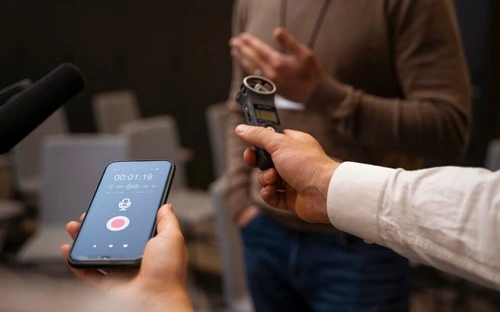
No, it is not illegal to record a conversation in Utah if you are a participant in the conversation. Utah is a one-party consent state under Utah Code Section 77-23a-4, which means that as long as one person involved in the communication consents to the recording, it is lawful. However, recording a conversation you are not part of, or intercepting private communications without proper consent, is illegal and can lead to criminal and civil penalties.
Understanding Utah’s Recording Laws
Utah’s recording laws are governed by the state’s criminal and privacy statutes, which are designed to balance personal privacy with the right to document conversations for legitimate purposes.
1. One-Party Consent Rule
- Legal Recording: If you are a participant in the conversation, your consent is sufficient to record it, even if the other party is unaware.
- Illegal Recording: Recording a conversation you are not involved in, or without the consent of at least one participant, is considered illegal wiretapping or eavesdropping.
2. Public vs. Private Conversations
- Public Conversations: Conversations in public spaces, where there is no reasonable expectation of privacy, can generally be recorded without consent.
- Private Conversations: Recordings of private discussions, such as those in homes, offices, or over the phone, require at least one party’s consent.
3. Types of Communication Covered
The law applies to various forms of communication, including:
- In-person conversations.
- Telephone calls (landlines, mobile phones, and VoIP).
- Electronic communications, such as video conferencing with audio.
Penalties for Illegal Recording in Utah
Recording a conversation without proper consent can result in both criminal charges and civil liabilities.
1. Criminal Penalties
- Felony Charges: Unauthorized recording is a third-degree felony in Utah, punishable by:
- Imprisonment: Up to 5 years in prison.
- Fines: Up to $5,000.
- Enhanced Penalties: Using illegal recordings for malicious purposes, such as blackmail or harassment, may lead to more severe penalties.
2. Civil Liability
Victims of unauthorized recordings may file lawsuits seeking:
- Actual Damages: Compensation for emotional distress, financial loss, or reputational harm caused by the recording.
- Statutory Damages: Courts may award additional penalties of up to $10,000 per violation.
- Punitive Damages: In cases of malicious intent, courts may impose further damages to deter future misconduct.
Exceptions to Utah’s Recording Laws
Utah law includes specific exceptions where recording may be permissible without one-party consent:
1. Public Settings
Recording conversations in public spaces where no reasonable expectation of privacy exists is generally permissible.
2. Law Enforcement
Police and other law enforcement agencies may record conversations as part of investigations if they obtain the necessary warrants or legal authorization.
3. Emergencies and Crime Prevention
Recording without consent may be allowed to document or prevent a crime or emergency, but these recordings must be carefully justified and may require judicial review.
Recent Legal Developments in Utah
1. Digital Privacy and Smart Devices
The rise of smart devices like Alexa and Google Home has led to concerns about inadvertent recordings. Utah courts have emphasized that recordings made by such devices must comply with state one-party consent laws if used for legal or public purposes.
2. Workplace Surveillance
Employers in Utah can monitor workplace communications on company-owned devices with proper notice to employees. Unauthorized recording of private workplace conversations may result in legal action.
3. Social Media and Digital Sharing
The misuse of recorded conversations on social media has resulted in lawsuits in Utah. Courts have imposed additional penalties for defamation and invasion of privacy in these cases.
How to Legally Record Conversations in Utah
- Be a Participant: Ensure you are directly involved in the conversation you intend to record.
- Obtain Consent: If you are not a participant, secure explicit consent from at least one party involved.
- Avoid Hidden Devices: Do not use concealed recording devices to capture conversations without authorization.
- Understand the Context: Determine whether the conversation takes place in a public or private space to gauge privacy expectations.
Related FAQs
Q1. Can I record a phone call in Utah without the other person knowing?
Ans: Yes, as long as you are a participant in the call, you can record it without notifying the other party.
Q2. Is it illegal to record a conversation I am not part of?
Ans: Yes, recording a conversation you are not involved in without consent from any participant is illegal under Utah law.
Q3. Can employers record workplace conversations in Utah?
Ans: Employers can monitor workplace communications on company-owned devices, but employees must be informed about monitoring practices.
Q4. Are public conversations protected by Utah’s recording laws?
Ans: No, conversations in public spaces where there is no reasonable expectation of privacy are not protected.
Q5. What happens if someone records me without my consent in Utah?
Ans: If the recording violates Utah law, you may file a criminal complaint or pursue a civil lawsuit for damages.