In Texas, as in all U.S. states, there is no law prohibiting driving barefoot. This common misconception likely stems from myths and misunderstandings about driving regulations. However, while it’s legal to drive without shoes, doing so may present safety concerns and potential legal implications in certain situations.
Legal Status of Driving Barefoot in Texas
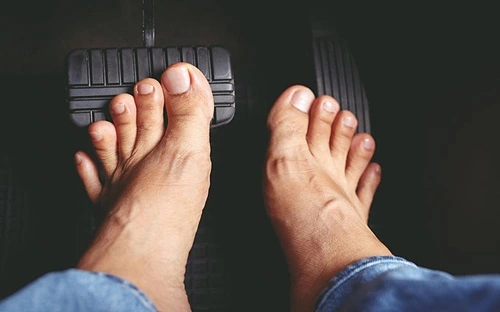
The Texas Department of Public Safety does not have any regulations that require drivers to wear shoes. This aligns with the policies of all 50 states, none of which have laws explicitly forbidding barefoot driving. This widespread belief in the illegality of driving barefoot may have originated from misconceptions about safety and liability.
Safety Considerations
While driving barefoot is legal, it may not always be the safest choice. Bare feet may lack the traction provided by appropriate footwear, potentially leading to slips off the pedals, especially in emergency situations. This can result in delayed reaction times or loss of vehicle control. Additionally, driving without shoes can increase the risk of foot injuries in the event of an accident.
Interestingly, certain types of footwear, such as high heels, flip-flops, or loose-fitting shoes, can also impair driving ability. These shoes might get caught under pedals or slip off, causing distractions or hindering pedal control. In some cases, driving barefoot may be safer than wearing such footwear.
Legal Implications in Accidents
Although driving barefoot isn’t illegal, it can have legal repercussions if you’re involved in an accident. Law enforcement officers might consider barefoot driving as a contributing factor to reckless driving, depending on the circumstances. In civil cases, opposing parties may argue that driving without shoes constitutes negligence, potentially affecting liability and insurance claims.
Recommendations for Drivers
To ensure safety and avoid potential legal issues, consider the following:
- Wear Appropriate Footwear: Choose shoes that provide good traction and pedal control. Avoid high heels, flip-flops, or loose-fitting shoes that can interfere with driving.
- Secure Removed Shoes: If you prefer to drive barefoot, ensure that any removed footwear is placed in a location where it won’t obstruct the pedals. Loose items in the driver’s footwell can become hazards.
- Be Aware of Local Ordinances: While Texas state law doesn’t prohibit barefoot driving, some municipalities might have specific regulations. Always be informed about local laws when driving in different areas.
Conclusion
Driving barefoot in Texas is legal, but it’s essential to consider the associated safety risks and potential legal implications. Wearing appropriate footwear can enhance driving safety and help avoid complications in the event of an accident. As always, prioritize safety and stay informed about both state and local regulations to ensure responsible driving practices.